You Won’t Believe What Tashkent’s Architecture Hides
Tashkent isn’t the city I expected—but in the best way possible. At first glance, it feels like a Soviet-era puzzle mixed with modern updates, but look closer and you’ll find layers of history whispering through its buildings. From grand Soviet monuments to delicate Islamic patterns, the architectural blend is unexpected, raw, and real. I walked its streets not just as a tourist, but as someone trying to decode a city rebuilding its identity—one brick, one dome, one concrete slab at a time. What I discovered was more than urban design; it was a living narrative of resilience, cultural memory, and quiet reinvention, all etched into stone, tile, and steel.
First Impressions: The Urban Contrast That Surprised Me
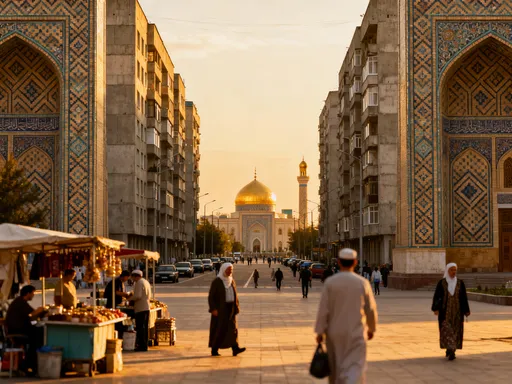
Arriving in Tashkent, I was struck by its order. Wide, tree-lined avenues stretch in precise grids, flanked by towering apartment blocks painted in soft pastels or neutral tones. This is a city shaped by planning, not organic growth—a hallmark of Soviet urbanism that prioritized efficiency, visibility, and control. The centerpiece, Amir Timur Square, embodies this ethos: a vast open plaza anchored by a monumental equestrian statue of the 14th-century conqueror, surrounded by government buildings with neoclassical facades. The space feels imposing, almost ceremonial, designed for parades and public gatherings rather than casual strolls.
Yet just beyond this ordered center, a different rhythm emerges. In neighborhoods like Hast Imam and the historic core near Chorsu Bazaar, narrow alleys twist beneath overhanging wooden eaves, and courtyard gates reveal glimpses of hand-carved wood and turquoise-tiled domes. Here, the city breathes differently. The contrast is not merely visual—it’s temporal. One moment you’re walking past a 1970s department store with geometric concrete shading, the next you’re passing a 16th-century madrasah with floral tilework that glimmers in the sun. This juxtaposition isn’t accidental; it’s the physical manifestation of Tashkent’s layered past, where destruction and renewal have played out repeatedly.
What makes this duality compelling is not the coexistence of old and new, but how they interact. In the Soviet era, historic structures were often preserved not for cultural reverence but as symbols of a controlled heritage. Today, however, the city’s architects and citizens are re-engaging with these remnants, not as relics, but as sources of identity. The contrast, then, is not a flaw—it’s a dialogue. It invites visitors to ask not just what Tashkent looks like, but how it remembers, and how it chooses to rebuild.
The Soviet Legacy: Concrete, Grandeur, and Daily Life
The 1966 earthquake that devastated Tashkent became a turning point in its architectural evolution. With over 300,000 buildings damaged or destroyed, the city was rebuilt under Soviet direction with speed and uniformity. The result was a wave of standardized, prefabricated apartment blocks—known locally as khrushchyovkas and later brezhnevkas—designed to house the masses efficiently. These five- to nine-story buildings, with their flat roofs and utilitarian facades, still dominate much of the cityscape, particularly in residential districts like Yunusabad and Mirzo Ulugbek.
Yet to dismiss these structures as purely functional would be to overlook their social significance. These buildings were not just shelters; they were part of a broader vision of collective living. Shared courtyards, communal laundry areas, and nearby schools and clinics reflected a model of urban life centered on accessibility and social cohesion. Today, these spaces have evolved. Courtyards are no longer just utilitarian—they’re alive with flower beds, children’s play areas, and shaded benches where neighbors gather in the evenings. The architecture may have been imposed from above, but its use has been reclaimed from below.
Perhaps the most striking example of Soviet architectural ambition in Tashkent is the metro system. Opened in 1977, it was one of the deepest in the world, built not only for transportation but also as a Cold War-era civil defense project. But beyond its engineering, the metro stations are artistic triumphs. Take Kosmonavtlar, dedicated to Soviet space achievements: its ceiling is adorned with celestial motifs, and bronze busts of cosmonauts line the platform. Gafur Gulom station honors the Uzbek writer with ornate mosaics depicting literary scenes, while Alisher Navoi features grand chandeliers and marble columns inspired by classical Islamic architecture—reinterpreted through a Soviet lens. These stations were designed to inspire, to educate, and to instill pride in both Soviet progress and Uzbek heritage, even as the latter was carefully curated.
The Tashkent Metro remains a daily ritual for thousands. Commuters pass through these gilded halls without glancing up, their routines blending the extraordinary with the ordinary. This is the quiet power of Soviet architecture: it was built for ideology, but it now serves life. The grandeur persists, not as propaganda, but as part of the city’s lived experience.
Traces of the Old City: Where Tradition Still Stands
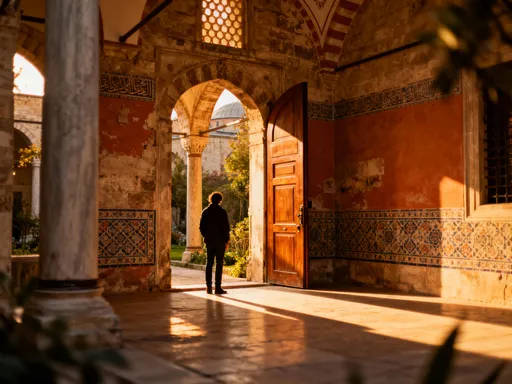
Before the 20th century, Tashkent was a thriving Silk Road hub, a city of caravanserais, mosques, and madrasahs built from baked brick, wood, and glazed tile. Much of that fabric was lost—first to Russian imperial expansion in the 1860s, then to the 1966 earthquake, and later to Soviet redevelopment. Yet fragments endure, quietly resisting erasure. In the Hast Imam complex, a cluster of preserved religious and scholarly buildings offers a window into pre-modern Tashkent. Among them stands the Barak Khan Madrasah, originally built in the 16th century and restored in the 1980s. Its facade, though modest in scale, is rich with geometric tilework in cobalt blue and turquoise, arranged in intricate star patterns that speak to a deep understanding of symmetry and sacred geometry.
Inside, the courtyard is shaded by a wooden arcade, its columns carved with spiral motifs and floral reliefs. The craftsmanship is not merely decorative; it reflects a philosophy of architecture as a harmonious extension of nature and faith. Similarly, the Tilya Sheikh Mosque, part of the same complex, features a domed prayer hall covered in gold leaf—hence its name, which means 'Golden Sheikh'. The interior is dim and serene, lit by hanging lanterns, with walls lined with calligraphic inscriptions from the Quran. These spaces were designed for contemplation, their proportions calibrated to create a sense of intimacy and awe.
What’s remarkable is how these structures were adapted to their environment. Thick adobe walls provided insulation against Tashkent’s extreme temperatures, while shaded courtyards and wind towers—known as badgirs—captured breezes for natural cooling. The architecture was not just beautiful; it was intelligent, responding to climate, culture, and spiritual needs. Today, these buildings are no longer just places of worship; they are cultural anchors, drawing both pilgrims and tourists. Their survival is a testament to the value placed on continuity, even in a city that has been repeatedly remade.
The Metro: Underground Museums No One Talks About
If the surface of Tashkent tells a story of reconstruction, its underground tells a story of quiet resistance. The Tashkent Metro, often overlooked by international travelers, is one of the most remarkable public art projects in Central Asia. Each station is a carefully composed environment, blending materials like marble, granite, bronze, and ceramic tile to create spaces that feel more like galleries than transit hubs. The level of detail is staggering: mosaics depicting poets and scientists, chandeliers with hundreds of crystal pendants, and walls clad in rare stones imported from across the USSR.
Take Mustaqillik Maydoni, the station beneath Independence Square. Its pillars are wrapped in white marble, and the ceiling features a series of circular motifs symbolizing unity and renewal. The floor is paved with dark gray granite, polished to a mirror finish. The overall effect is one of solemn grandeur—a space designed to evoke dignity and national pride. Then there’s Pakhtakor, named after the cotton industry, with wall panels showing agricultural workers in stylized relief, their faces strong and determined. The choice of cotton is not arbitrary; it reflects Uzbekistan’s economic backbone and the Soviet emphasis on productive labor.
But perhaps the most poetic is Beruniy, dedicated to the 11th-century polymath Al-Biruni. The station’s walls are lined with scientific formulas, astronomical charts, and quotations in Arabic script, celebrating the Islamic Golden Age of learning. This is significant: even under an officially atheist regime, Uzbek identity was allowed to surface in coded forms. The metro became a canvas for cultural memory, where heroes of science and literature could be honored without overt religious references. Today, these stations remain in daily use, their beauty absorbed into routine. A mother waits with her child beneath a mosaic of Avicenna; a student reads a book beside a statue of Timur. The art is not behind glass—it is part of life.
The metro’s endurance is also a technical achievement. Built to withstand earthquakes, its deep tunnels and reinforced structures proved their worth during seismic events. More than infrastructure, it is a symbol of resilience—both geological and cultural. To ride it is to move through layers of meaning, descending not just into the earth, but into the city’s collective imagination.
Modern Revival: New Buildings, Old Inspirations
In the decades since independence, Tashkent has entered a new phase of architectural expression. No longer bound by Soviet aesthetics, the city has embraced a revival of traditional forms, reinterpreted for the 21st century. This is most visible in government and cultural projects, where domes, iwans (vaulted halls), and calligraphic ornamentation have returned with renewed prominence. The Uzbekistan Palace, completed in 2006, is a prime example. Set within expansive gardens, the building combines a central dome with four corner minarets, its facade covered in blue and white tilework that echoes the style of Samarkand’s Registan complex. Inside, the grand reception halls feature crystal chandeliers, handwoven carpets, and walls adorned with national motifs.
This revival is not mere imitation. Architects are engaging with tradition critically, adapting historical forms to modern functions and materials. The new mosque complexes, such as the Hazrati Imam Mosque near the old city, use reinforced concrete and steel but maintain traditional proportions and decorative elements. The result is a hybrid style—neither purely historical nor entirely contemporary, but something in between. Even private developments are reflecting this trend: luxury apartments and office buildings now incorporate arched windows, latticework screens (known as jali), and courtyard layouts that nod to regional heritage.
What drives this resurgence? Partly, it is a matter of national identity. After decades of Soviet rule, independent Uzbekistan has sought to reassert its cultural roots. Architecture has become a tool of this reclamation, a way to visually declare continuity with a pre-Soviet past. But it is also practical: traditional designs offer climate-responsive solutions. Courtyards provide natural ventilation, domes reduce heat absorption, and shaded walkways protect from the sun. In a city where summer temperatures can exceed 40°C (104°F), these are not just aesthetic choices—they are intelligent adaptations.
The modern revival is not without criticism. Some argue that the new buildings are overly monumental, prioritizing symbolism over human scale. Others note that the focus on grand projects sometimes comes at the expense of affordable housing or pedestrian-friendly urban design. Yet, even these debates are part of a healthy architectural conversation—one that acknowledges the past while shaping the future.
Living Architecture: How People Use and Shape Spaces
Architecture is not complete until it is lived in. In Tashkent, this truth is everywhere evident. The Chorsu Bazaar, housed under a distinctive blue dome at the edge of the old city, is more than a market—it is a social ecosystem. Vendors spill out from the circular building into the surrounding streets, their stalls piled high with spices, dried fruits, and fresh bread. The air is thick with the scent of cumin and baking dough. Families gather in the shaded arcades, sharing tea and stories. The space, originally built in the 1980s on the site of a historic marketplace, was designed for commerce, but it has become something more: a place of connection, memory, and daily ritual.
Similarly, in residential neighborhoods, Soviet-era apartment blocks have been transformed by their inhabitants. Balconies are filled with potted plants, laundry lines crisscross corridors, and ground-floor units have been converted into small shops or cafes. In Yunusabad, I watched an elderly woman water geraniums on her fifth-floor balcony, the red blooms a vibrant contrast to the gray concrete. These acts of personalization are not rebellions; they are affirmations of life. They show how people adapt formal, impersonal spaces into homes, how they inscribe their own stories onto the city’s fabric.
Even public squares, designed for official events, are repurposed by citizens. In the evenings, families stroll along Amir Timur Square, children chasing bubbles blown by street performers. Teenagers gather near fountains to take photos, while older couples sit on benches, watching the world go by. The architecture remains unchanged, but its meaning shifts with use. A plaza built for state ceremonies becomes a space for leisure, for love, for ordinary joy.
This dynamic interaction between people and buildings is what makes Tashkent’s architecture truly alive. It is not frozen in time, nor is it dictated solely by planners or politicians. It is shaped daily by the choices, needs, and dreams of those who inhabit it. The city’s buildings do not just stand—they respond.
Why Tashkent’s Style Matters Beyond Beauty
Tashkent’s architecture is not a curated museum exhibit. It is a record of survival. The city has been destroyed and rebuilt multiple times—by conquest, by earthquake, by ideology. Each reconstruction left a mark, not just on the skyline, but on the soul of the place. The mix of styles—Soviet, Islamic, modernist, traditional—is not chaotic. It is honest. It refuses to pretend that history can be erased or simplified. Instead, it presents a layered truth: that identity is not fixed, but forged through loss, adaptation, and renewal.
For travelers, this means Tashkent offers more than picturesque views. It offers a chance to witness how cities heal. Walking its streets, you are not just seeing buildings—you are reading a story of resilience. The cracked tile on a 16th-century madrasah, the chipped marble in a metro station, the fresh paint on a newly restored courtyard—all speak to a culture that values continuity, even when continuity must be rebuilt from fragments.
Moreover, Tashkent challenges the idea that beauty must be pristine. There is beauty in the weathered, the repurposed, the imperfect. A Soviet-era plaque next to a hand-carved wooden gate, a modern mosque rising beside a crumbling wall—these contrasts are not flaws. They are dialogues. They invite us to look deeper, to ask not just what a building is, but what it has lived through.
As Uzbekistan continues to open to the world, Tashkent stands as a model of how cities can honor their past without being trapped by it. Its architecture does not deny the Soviet era, nor does it romanticize the pre-modern past. It integrates both, creating a urban landscape that is complex, evolving, and deeply human. For visitors, the lesson is clear: look beyond the surface. Listen to the walls. Follow the patterns in the tile. In Tashkent, every brick has a story, and every story is still being written.