What I Ate While Wandering Lucerne’s Cobblestone Streets
Lucerne isn’t just lakes and mountains—its food culture is a quiet revelation. As I wandered through misty mornings and golden sunsets, every bite told a story: from steaming rösti at a family-run café to creamy Swiss chocolate that melted like alpine snow. This isn’t about fancy restaurants—it’s real, humble flavors shaped by tradition and terrain. If you think Swiss cuisine is just cheese and chocolate, trust me, you’re in for a surprise. Let me take you on a flavorful journey through the heart of Switzerland.
First Bites: The Morning Rituals of Lucerne
There is a rhythm to mornings in Lucerne, one that begins not with alarms, but with the scent of freshly baked bread and rich, dark coffee drifting through quiet alleyways. As dawn lifts over the Reuss River, locals emerge in small groups, stopping at neighborhood bakeries where loaves are still warm from the oven. These are not grand gestures of culinary spectacle, but quiet, daily rituals—each pastry wrapped in paper, each coffee poured with care. The Swiss morning meal is a modest affair, yet deeply rooted in tradition, and to partake is to understand the soul of the city before the tourists arrive.
One of the first things I noticed was the reverence for Zopf, a braided bread that appears every Sunday in homes and bakeries alike. Soft, golden, and slightly buttery, it’s often served with honey or a thin slice of aged cheese. Unlike the crusty baguettes of France or the sweet danishes of Scandinavia, Zopf is understated—its beauty in its simplicity. I watched as elderly couples selected their loaves with care, exchanging pleasantries with the baker, while children waited patiently for a sample of warm bread. These moments were not transactions, but connections, small threads in the fabric of community life.
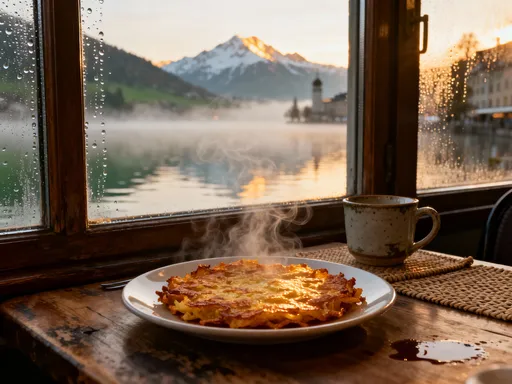
Another morning staple is rösti, a dish so iconic it borders on national treasure. Originally a farmer’s breakfast from the German-speaking cantons, rösti is a golden cake made from grated potatoes, slowly fried until crisp on the outside and tender within. I first tried it at a small café near the Jesuit Church, where the owner, Frau Meier, insisted it be served with a fried egg and a side of apple compote. The contrast of textures—the crunch of the potato crust giving way to soft yolk and sweet fruit—was revelatory. What struck me most was not just the flavor, but the intention behind it. This was not fast food; it was food made to be savored, a deliberate start to the day.
Why does this matter to the traveler? Because mornings set the tone. When you align yourself with the local rhythm, you stop observing and begin belonging. Eating like a Lucerner means rising early, walking to the bakery, choosing your bread with care, and sitting quietly with your coffee. It means embracing slowness in a world that often prizes speed. In doing so, you gain more than a meal—you gain insight. The Swiss value precision, order, and quality, and these principles are reflected not just in their watches or trains, but in the way they begin their day. To eat as they do is to understand that even the simplest moments can be meaningful.
Cheese Beyond Fondue: Uncovering Authentic Alpine Flavors
If Swiss cuisine had a symbol, it would undoubtedly be cheese. But beyond the bubbling pots of fondue that populate postcards and tourist menus lies a far richer, more nuanced dairy culture—one that thrives in Lucerne’s markets, dairies, and family kitchens. Here, cheese is not just food; it is history, geography, and craftsmanship rolled into one. It is shaped by altitude, by season, and by centuries of alpine necessity. And while fondue may be the star of Swiss dining lore, it is rarely eaten daily. Instead, the true essence of Swiss cheese culture unfolds in quieter forms: a slice of Sbrinz on rye bread, a wedge of Vacherin served with boiled potatoes, or a smear of creamy Tête de Moine scraped into rosettes with a girolle.
At the Wochenmarkt am Schwanenplatz, I met Herr Wenger, a dairy farmer from the nearby Entlebuch Valley, who brought his wheels of Sbrinz to market each Saturday. Aged up to 18 months, Sbrinz is one of Switzerland’s oldest cheeses, with a firm texture and nutty depth that intensifies with time. “We don’t rush it,” he told me, running a hand over the waxed rind. “The mountains teach patience.” His cheese, he explained, is made from summer milk—cows grazing on high pastures where wild herbs and alpine flowers infuse the milk with subtle complexity. This is terroir in its purest form: taste the cheese, and you taste the landscape.
Vacherin Fribourgeois, another regional favorite, offers a different experience. Softer and more pungent, it is often enjoyed in winter, melted over potatoes or paired with pickled onions. I sampled it at a small deli near the Musegg Wall, where the owner served it with a glass of local white wine. The combination was earthy and comforting, a reminder that Swiss cuisine, for all its precision, is deeply rooted in sustenance. These cheeses were never meant to impress—they were created to preserve milk through long winters, to feed families when fresh dairy was scarce. Today, they endure not because of nostalgia, but because they taste profoundly good.
The geography of Switzerland plays a crucial role in shaping these flavors. High altitudes, short growing seasons, and rugged terrain have long dictated what can be grown and stored. Dairy became a cornerstone of survival, and cheesemaking evolved into an art. Even today, many cheeses are still produced in small batches, using raw milk and traditional methods. This dedication to quality over quantity is evident in every bite. For the traveler, understanding this context transforms cheese from a mere snack into a story—a story of resilience, tradition, and the quiet genius of mountain life.
Street Food with Soul: Where Locals Grab a Quick Bite
Lucerne’s streets may be lined with historic buildings and scenic vistas, but its true character reveals itself in the small, unassuming places where locals eat on the go. Near the Kapellbrücke, by the train station, and along the riverbanks, food stands offer quick, satisfying meals that reflect the city’s working rhythm. This is not gourmet dining, nor is it meant to be. It is food designed for efficiency, flavor, and comfort—meals that fuel the day without fanfare.
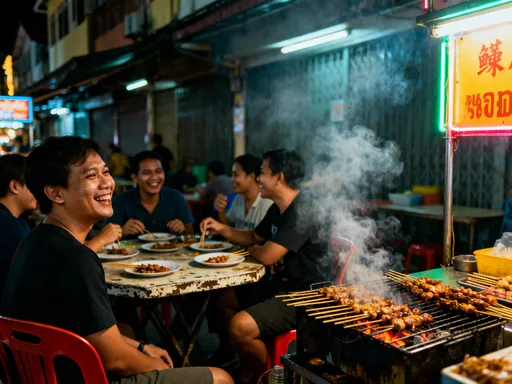
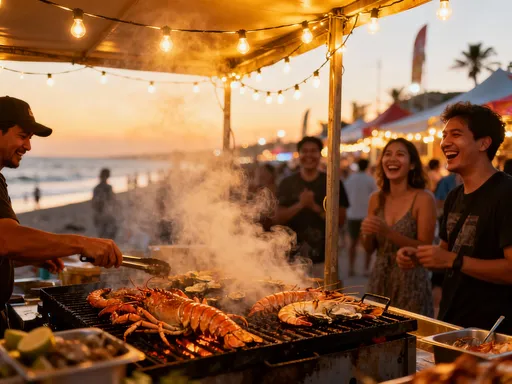
One of the most common sights is the bratwurst stand, where plump sausages sizzle over open grills. Made from finely ground pork and seasoned with marjoram and nutmeg, these sausages are served in crusty rolls with a dollop of sharp mustard. I tried one at lunchtime, standing at a narrow counter beside a postal worker on his break. The bread was warm, the sausage juicy, the mustard tangy enough to cut through the richness. It was simple, yes, but deeply satisfying—the kind of meal that tastes better when eaten outdoors, with a view of the water and the sound of church bells in the distance.
Pretzels, too, are a staple of Lucerne’s street fare. But these are not the oversized, salt-crusted versions found in American malls. Swiss pretzels are smaller, softer, and often brushed with butter before baking, giving them a delicate sheen and a hint of sweetness. I bought one from a vendor near the Bahnhofstrasse and watched as he folded it into a paper cone. “For walking,” he said with a smile. As I wandered toward the lake, the warm bread in hand, I realized how much these small moments define a place. They are unscripted, unhurried, and utterly real.
Other favorites include baked pastries filled with apple, cherry, or quark—a fresh cheese similar to ricotta. Sold at kiosks and bakeries alike, these handheld treats are perfect for a mid-morning break. I especially enjoyed a slice of Mutschli, a spiced meat pie that some say originated as a miner’s lunch. Its flaky crust and savory filling made it a favorite among students and laborers alike. What unites all these foods is their accessibility. They are affordable, quick, and made with care. For the visitor, seeking them out is a way to eat like a local, to step beyond the polished restaurant scene and into the pulse of daily life.
Dining with a View: Lakeside Eateries and Seasonal Menus
When the afternoon light gilds the surface of Lake Lucerne, many restaurants open their terraces, inviting diners to enjoy meals with a panorama of water, mountains, and sky. These lakeside eateries range from family-run inns to upscale establishments, but the best share a common philosophy: let the ingredients speak. Menus change with the seasons, reflecting what is fresh and available. In spring, you might find morel mushrooms and lamb; in summer, fresh greens and berries; in autumn, game and root vegetables; and in winter, heartier stews and preserved foods.
Fish from the lake is a particular highlight. Perch and char, caught locally, are often prepared with minimal intervention—pan-seared in butter, finished with lemon and herbs, and served with boiled potatoes or a simple salad. I had an unforgettable meal at a waterside restaurant in Weggis, where the waiter recommended the day’s catch: a fillet of whitefish from Lake Lucerne, lightly floured and fried until golden. The flesh was delicate, almost sweet, with a clean finish that spoke of cold, clear waters. Paired with a glass of Chasselas, a crisp Swiss white wine, it was a meal of quiet perfection.
What sets these restaurants apart is not just the view, but their commitment to authenticity. While some cater to tourists with multilingual menus and international dishes, the most memorable ones focus on Swiss classics, prepared with care. I noticed that the best chefs source ingredients locally—cheese from nearby dairies, vegetables from regional farms, meats from trusted butchers. This dedication to provenance ensures freshness and supports the local economy. Even in winter, when outdoor seating closes, these restaurants remain cozy and inviting, with wood-paneled interiors, crackling fireplaces, and warm lighting that makes you want to linger.
For travelers, dining by the lake is more than a meal—it is an experience. It is the pleasure of eating slowly, of watching boats glide across the water, of feeling the cool breeze off the mountains. It is a reminder that food is not just fuel, but a way to connect—with place, with people, with the passing of time. Whether you come for the view or the food, you leave with both.
Sweet Escapes: Chocolate, Cake, and Confectionery Culture
In Lucerne, dessert is not an afterthought. It is a daily ritual, a celebration of craftsmanship, and a testament to Switzerland’s enduring love affair with sweetness. From historic confectioneries to modern chocolatiers, the city offers a world of treats that go far beyond the chocolate bars found in airport shops. Here, chocolate is made in small batches, often by hand, using high-quality cocoa and time-honored techniques. Cakes are layered with care, filled with fruit, cream, or nut pastes, and displayed like works of art. To walk through Lucerne’s old town is to follow the scent of sugar and vanilla, to be drawn into Konditoreis where time slows and indulgence feels like virtue.
I began my exploration at a family-owned chocolatier near the Hofkirche, where the owner, Madame Keller, demonstrated how truffles are made. Dark chocolate is melted, blended with cream and butter, then cooled and rolled by hand. Some are dusted with cocoa, others dipped in crushed nuts or flavored with orange zest. “The key,” she said, “is balance—sweetness without cloying, richness without heaviness.” I sampled a milk chocolate truffle infused with lavender, and the floral note lifted the creaminess in a way that was both surprising and harmonious. These are not mass-produced sweets; they are delicate creations, meant to be savored one at a time.
Another favorite is Nusstorte, a caramelized walnut tart that originated in the nearby Emmental region. The filling is made from sugar, cream, and finely chopped walnuts, baked in a buttery crust until the top forms a deep amber glaze. I had a slice at a café near the Lion Monument, where it was served with a small cup of espresso. The contrast of bitter coffee and sweet, nutty tart was perfect. Unlike richer desserts, Nusstorte feels substantial without being heavy—a testament to Swiss restraint even in indulgence.
And then there are the pastries. Luxemburgerli, delicate macaron-like cookies filled with ganache, are a regional specialty. Light, crisp, and melt-in-the-mouth, they come in flavors like rose, pistachio, and salted caramel. I bought a box to share, but ended up eating one every afternoon during my stay. These sweets are more than treats; they are expressions of heritage. Each bite carries the weight of generations of bakers, of afternoons spent at café tables, of celebrations and quiet moments alike. In Lucerne, dessert is not excess—it is tradition, pleasure, and artistry, all in one.
Markets and Makers: Behind the Scenes of Local Food
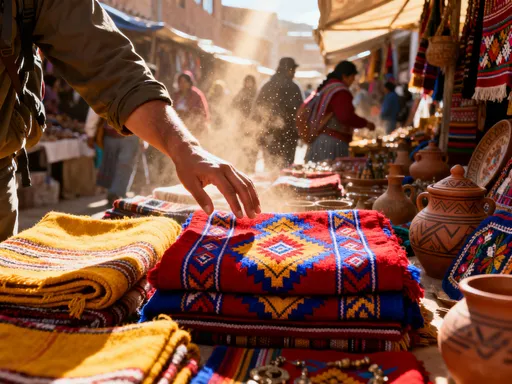
To understand Lucerne’s food culture, one must visit its markets. The Wochenmarkt am Schwanenplatz, held every Tuesday and Saturday, is a vibrant showcase of regional agriculture and artisanal craftsmanship. Stalls overflow with seasonal produce: crisp apples from nearby orchards, bundles of fresh herbs, jars of golden honey, and baskets of wild mushrooms foraged from the forest. Butchers display sausages and cured meats, bakers offer sourdough loaves and fruit tarts, and dairy vendors proudly present their cheeses. This is not a tourist market, but a working one—where locals shop, vendors know their customers by name, and quality is non-negotiable.
What struck me most was the transparency of the system. Many farmers bring their produce directly from the fields, selling it hours after harvest. I spoke with a woman who grew strawberries on the edge of the lake, her hands still stained with soil. “They’re sweet because they ripen in the sun,” she said, offering a sample. They were, in fact, the sweetest strawberries I’d ever tasted—small, fragrant, and bursting with flavor. This direct connection between grower and consumer ensures freshness and builds trust. It also reflects a broader Swiss value: respect for the source.
The market is also a place of sustainability. Plastic is minimal; most customers bring their own bags and containers. Waste is low, packaging is simple, and seasonality is honored. You won’t find strawberries in winter or asparagus in summer—what’s available is what’s growing. This adherence to natural cycles may seem limiting, but it enhances appreciation. When something is only available for a few weeks, you savor it all the more.
For the traveler, the market offers a rare glimpse into everyday life. It is unpolished, unhurried, and deeply authentic. It is where food is not a performance, but a practice—a daily act of care, connection, and continuity. To walk through the Wochenmarkt is to witness the heartbeat of Lucerne’s culinary culture, one tomato, one cheese wheel, one conversation at a time.
Bringing It Home: How Lucerne’s Flavors Changed My Kitchen
Travel changes you in ways both large and subtle. For me, Lucerne’s greatest gift was not a souvenir or a photograph, but a shift in how I approach food. Since returning home, I’ve started making rösti on Sunday mornings, grating potatoes by hand and frying them slowly until golden. I seek out local cheeses with character, reading labels like stories. I visit farmers’ markets with new eyes, asking where things were grown and how they were made. These may seem like small changes, but they reflect a deeper appreciation—one born from walking Lucerne’s cobblestone streets, tasting its seasons, and feeling the quiet pride of its people.
Lucerne taught me that cuisine is not just about flavor, but about values. It is about patience, as seen in aged cheeses and slow-cooked stews. It is about care, evident in handmade chocolates and daily bread. It is about connection—between people, land, and tradition. In a world that often prioritizes speed and convenience, Lucerne’s food culture is a reminder that some things are worth waiting for.
To the traveler, I offer this: when you visit a place, eat like it matters—because it does. Let breakfast be a ritual. Let lunch be a discovery. Let dinner be a celebration. In doing so, you don’t just taste a destination—you understand it. Lucerne’s flavors are simple, grounded, and deeply satisfying, much like the alpine soul that shaped them. And in that simplicity, there is richness beyond measure.