You Won’t Believe What I Ate in Stavanger
Stavanger isn’t just fjords and oil rigs—its food scene blew my mind. From buttery brown cheese to fresh herring under the midnight sun, every bite told a story. I came for the nature, but stayed for the flavors. This coastal gem serves tradition on a plate, blending old Nordic roots with modern coastal flair. If you think Norwegian food is just fish and potatoes, trust me—you’re in for a wild taste ride.
First Bite: Why Stavanger’s Food Culture Surprised Me
When I first arrived in Stavanger, I admit I didn’t expect much from the local cuisine. Like many travelers, I carried the stereotype of Norwegian food as simple, even bland—endless plates of boiled potatoes, plain fish, and meatballs served without flourish. I imagined meals eaten quickly, in silence, beneath gray skies. But within hours of stepping off the train, that image began to dissolve. The air smelled of salt, wood smoke, and something sweetly tangy—fermenting dairy, I would later learn. At a small roadside stand near Sola Strand, I was handed a warm waffle with a thick slice of brunost, Norway’s famous brown cheese. The first bite was revelatory: rich, caramel-like, with a sharpness that lingered on the tongue. It wasn’t just food—it was alchemy. This moment marked the beginning of a deeper understanding: Norwegian cuisine is not about excess, but intention. Every ingredient has a purpose, a season, and a story rooted in survival, landscape, and community.
Stavanger’s culinary identity is shaped by its geography. Nestled along the North Sea, the region benefits from cold, clean waters teeming with marine life, while its inland valleys and rolling hills support hardy livestock and resilient crops. This duality—sea and soil—creates a balanced larder. Fishers haul in cod and herring at dawn, while farmers tend to cows whose milk produces some of the country’s most distinctive dairy. The climate demands preservation, which has led to time-honored techniques like drying, salting, smoking, and fermenting. These are not relics of the past but living traditions, still practiced in homes and small producers across Rogaland county. The result is a food culture that is both humble and profound, where flavor is coaxed slowly, patiently, from nature’s offerings.
That first taste of brunost at the roadside stand wasn’t just a snack—it was an invitation. The vendor, an older woman with weathered hands and a ready smile, explained how the cheese is made from whey, a byproduct of cheese production, boiled for hours until it caramelizes. It’s a testament to Norwegian frugality and ingenuity: nothing is wasted. She offered a second piece, this time on a piece of rugbrød, the dense rye bread that anchors so many Norwegian meals. The combination was earthy, sweet, and deeply satisfying. In that moment, I realized I wasn’t just eating—I was learning. Food in Stavanger is a language, and I had just begun to understand its vocabulary.
The Heart of the Plate: Seafood That Tastes Like the Ocean Itself
If Stavanger has a culinary heartbeat, it pulses in its seafood. The city’s proximity to the North Sea means fish arrives on plates with astonishing freshness. Unlike in landlocked regions where seafood is frozen and transported, here it is often hours—sometimes minutes—from boat to kitchen. This immediacy transforms the eating experience. Cod, for instance, is not the dry, flaky fillet often found elsewhere but tender, moist, and subtly sweet, with a clean finish that recalls cold tides and rocky shores. Herring, a staple since Viking times, appears in dozens of preparations: pickled in mustard sauce, spiced with cloves and onions, or simply grilled with a touch of dill. Mackerel, oily and rich, is often smoked or cured, its flavor intensified by the sea air and traditional methods.
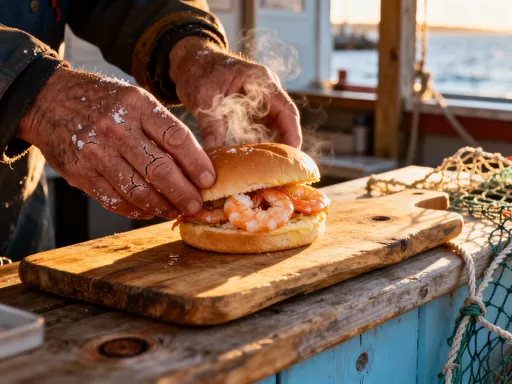
One of the most memorable experiences was visiting the Fisketorget, Stavanger’s vibrant fish market. Open-air and bustling, it’s a sensory immersion. The air hums with the cries of gulls and the low chatter of vendors. Crates overflow with glistening silver herring, whole cod with eyes still bright, and plump shrimp pulled from nearby fjords. I watched as a fishmonger deftly cleaned a pair of halibut, his knife flashing in the morning light. When he offered a sample of raw cod, I hesitated—then took the bite. It was cool, almost creamy, with a clean brininess that vanished into sweetness. No sauce, no seasoning—just the ocean, distilled. Nearby, a woman sold rekesmørbrød, shrimp sandwiches on buttered bread, piled high with fresh dill. I bought one and ate it standing by the harbor, the breeze tugging at my coat, the sun glinting off the water. It was simple, yes—but also perfect.
What struck me most at the market was not just the quality of the fish, but the pride of the people who sell it. These are not anonymous suppliers but fishermen, many of whom still go out in small boats before dawn. They know their catch by name, by method, by tide. One vendor told me he uses only line-caught cod, believing it tastes better and is more sustainable. Another explained how herring is best in spring and early summer, when the fish are fat from feeding. This connection between source and plate is rare in modern food systems, yet here it feels natural, even sacred. In Stavanger, seafood is not just sustenance—it’s heritage, identity, and a daily celebration of the sea’s generosity.
Beyond Fish: Hidden Dairy and Grain Traditions
While seafood dominates the coastal narrative, Stavanger’s food culture is equally defined by its dairy and grain traditions. These are the quiet pillars of the Norwegian table—less flashy than a grilled fish platter, but no less essential. Dairy, in particular, holds a special place. From kulturmelk, a slightly sour fermented milk similar to buttermilk, to filmjölk, a probiotic-rich yogurt-like product, Norwegians consume dairy not just for nutrition but for its comforting familiarity. In rural areas, many families still keep cows, and small dairies produce cheeses with distinct regional character. One such visit took me to a family-run farm outside Sandnes, where a third-generation cheesemaker showed me how they age their gjetost—goat cheese—using traditional copper vats. The process is slow, requiring constant attention, but the result is a cheese with depth, warmth, and a haunting sweetness that lingers long after the last bite.
Equally important is rugbrød, the dense, dark rye bread that serves as the foundation for most Norwegian meals. Unlike the soft sandwich loaves common elsewhere, rugbrød is hearty, almost chewy, with a complex flavor profile that includes notes of molasses, sourdough, and toasted grain. It’s typically sliced thin and topped with cheese, cold cuts, pickled vegetables, or fish—a simple open-faced sandwich known as smørbrød. During my stay, I visited a small bakery in the old town where a baker named Ingrid hand-mixed her dough using locally milled rye and a sourdough starter that had been active for over 20 years. She explained that the fermentation process, which can last up to three days, not only develops flavor but also makes the bread more digestible. Watching her shape the loaves, I realized this was more than baking—it was stewardship. Each loaf carried forward a tradition stretching back centuries, a link between past and present, farmer and eater.
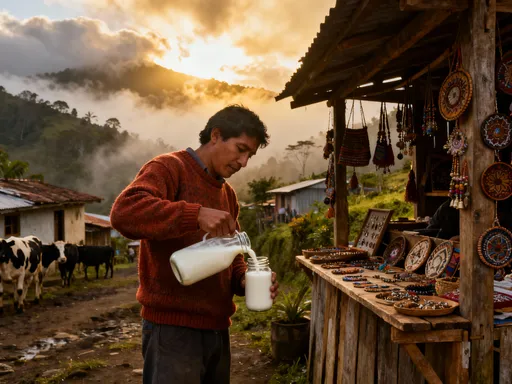
Another revelation was kveite, a fermented whey drink once common in rural Norway but now a rarity. I tried it at a farmhouse cafe near Jæren, where it was served chilled in a mason jar. The taste was sharp, slightly fizzy, with a lactic tang that reminded me of kefir. The owner told me it was traditionally given to children for strength and was believed to aid digestion. Though not widely available in supermarkets, such drinks are experiencing a quiet revival among food artisans who value old methods and natural preservation. These dairy and grain traditions—often overlooked by tourists—form the backbone of daily Norwegian life. They speak of resilience, resourcefulness, and a deep respect for the land’s rhythms.
Old Meets New: How Stavanger’s Chefs Are Reinventing Tradition
While Stavanger honors its culinary past, it is also home to a quiet revolution in the kitchen. A new generation of chefs is reinterpreting Norwegian food with creativity, precision, and reverence. They are not discarding tradition but reimagining it—using ancient techniques in modern contexts, elevating humble ingredients with artistic presentation, and telling stories through taste. One evening, I dined at a small restaurant tucked away in the Vågen harbor area, where the tasting menu read like a poem of the region: cured mackerel with wild sorrel, fermented potato purée, reindeer tartare with cloudberries. Each dish was a meditation on place, season, and memory.
The chef, a young woman named Liv, had trained in Copenhagen but returned to Stavanger to work with local producers. Over coffee after the meal, she explained her philosophy: “We don’t invent new flavors. We uncover the ones that have always been here.” She uses traditional methods like fermenting, drying, and cold-smoking, but applies them in unexpected ways—such as air-dried cod served with a foam of dill oil, or pickled rosehips paired with goat cheese mousse. Her kitchen is a laboratory of preservation, where jars of fermenting vegetables line the shelves and fish hang in temperature-controlled rooms for weeks. Yet, despite the innovation, the food never feels pretentious. It remains grounded, honest, deeply Norwegian.
What makes this culinary movement so compelling is its balance. These chefs are not chasing global trends or exotic ingredients. Instead, they dig deeper into their own heritage, asking: What did our grandparents eat? How can we honor that while making it relevant today? The result is a cuisine that feels both ancient and immediate. Tasting menus in Stavanger’s best restaurants are not just meals—they are journeys through time and terrain. They remind us that tradition is not static; it evolves, breathes, and adapts. And in this evolution, Norwegian food finds new life, new meaning, and new admirers.
Street Bites and Local Hangouts: Eating Like a Real Stavanger Resident
For all the elegance of fine dining, some of my most memorable meals in Stavanger happened in the simplest places. The city’s soul is not found only in upscale restaurants but in its everyday food culture—its kiosks, cafes, and neighborhood bakeries. These are where locals gather, where routines unfold, and where food is both fuel and comfort. One morning, I followed the scent of grilled shrimp to a small blue kiosk by the marina. A line had formed—construction workers, retirees, a woman in a nurse’s uniform—all waiting for the same thing: a rekesmørbrød. I ordered one, and the vendor piled fresh, buttery shrimp onto a slice of soft white bread, added a smear of mayonnaise, a sprinkle of dill, and a few rings of red onion. It was served on a paper plate, with a paper napkin. I ate it on a bench overlooking the boats, the sun rising behind the cathedral. It cost less than five dollars, but it was one of the best things I’ve ever eaten.
Another discovery was Stavanger’s coffee culture. Norwegians drink more coffee per capita than almost any other nation, and in Stavanger, it shows. Cozy cafes dot the old town, each with its own character. I spent an afternoon at a small shop called Kaffebønna, where the beans are roasted in-house and the baristas know their regulars by name. I ordered a flat white and a piece of lefse, a soft flatbread often spread with butter and sugar. As I sipped my coffee, an older couple sat down nearby, sharing a slice of apple cake and speaking in low, comfortable tones. No one was in a hurry. No one was on their phone. It was a moment of quiet connection, facilitated by food and drink. These cafes are not just places to eat—they are community spaces, where loneliness is eased and friendships nurtured over shared tables.
Even grocery shopping became a culinary adventure. I visited a local Coop Mega, where the deli counter offered pre-made smørbrød, jars of house-pickled vegetables, and freshly baked bread. I bought a ready-made sandwich with roast beef, raw onion, and a fried egg—a classic Norwegian combination—and ate it in a park beside the river. Children played, dogs chased balls, and the sun filtered through the trees. In that moment, I didn’t feel like a tourist. I felt like a resident, living a small, ordinary, beautiful Norwegian day. These everyday experiences—simple, unscripted, genuine—are what make Stavanger’s food culture so accessible and so moving.
Seasonal Rhythms: How Time of Year Shapes What’s on the Table
In Stavanger, food is not static—it moves with the seasons. The calendar dictates not just what is available, but how it is prepared, preserved, and celebrated. Summer is a time of abundance. The long daylight hours—sometimes stretching into midnight—fuel a burst of growth. Berries ripen in the forests: cloudberries, lingonberries, wild strawberries. Farmers harvest new potatoes, their skins so thin they need not be peeled. Grilling becomes a national pastime, with families gathering in backyards to cook lamb, pork, and fresh fish over open flames. One summer evening, I joined a local family for fårikål, Norway’s unofficial national dish—mutton and cabbage stewed with peppercorns. It was hearty, fragrant, and deeply comforting, best enjoyed with a slice of rugbrød and a cold local beer. Though traditionally a fall dish, its preparation begins in summer, when families buy cuts of mutton to freeze for the colder months.
Winter, in contrast, is a season of preservation and memory. With short days and limited fresh produce, Norwegians rely on foods stored from autumn: dried fish, pickled vegetables, fermented meats, and root vegetables kept in cool cellars. One of the most iconic winter dishes is pinnekjøtt, lamb ribs that are salted, dried, and steamed over birch branches. I tried it during a Christmas market visit, where a vendor served it with mashed rutabaga and boiled potatoes. The meat was tender, smoky, with a depth of flavor that only time and tradition can create. Another winter staple is lutefisk, though less common now—a gelatinous dish made from dried cod treated with lye, then rehydrated and baked. It has a polarizing reputation, but those who love it swear by its delicate texture and cultural significance.
The shift between seasons is marked by food rituals. In autumn, families gather to make preserves, canning berries and pickling cucumbers. In spring, they collect wild garlic and early greens from the hillsides. These rhythms are not just practical—they are cultural. They connect people to the land, to their ancestors, and to each other. Restaurants in Stavanger reflect this seasonality, changing menus monthly, even weekly, to feature what is freshest. A dish that appears in June may vanish by August, only to return, transformed, the following year. This attentiveness to time and nature is one of the most beautiful aspects of Norwegian food culture—a reminder that eating is not just an act of consumption, but of participation in a larger cycle.
Final Course: Why Food Is Stavanger’s Most Underrated Attraction
By the end of my trip, I realized something unexpected: the meals had become the highlight of my journey. I had hiked Pulpit Rock, marveled at the Lysefjord, and wandered the charming streets of Gamle Stavanger. But what I remembered most vividly were the tastes—the sweet tang of brunost, the briny freshness of raw cod, the warmth of a rye bread sandwich eaten on a park bench. Food had become my guide, my teacher, my bridge to the people and place. It had opened doors that scenery alone could not. A shared coffee with a stranger, a smile from a fish vendor, the quiet pride of a baker—these moments of connection were made possible through food.
Stavanger’s cuisine is more than a collection of dishes. It is a reflection of Norwegian identity: modest, resilient, deeply connected to nature and community. It speaks of a people who have learned to thrive in a challenging climate, who value simplicity, sustainability, and seasonality long before they became global trends. To eat in Stavanger is to participate in that story, to taste centuries of adaptation and care. And yet, this aspect of the city remains underrated by many travelers, who come for the fjords and leave without discovering the richness of the table.
For women between 30 and 55—many of whom are caregivers, homemakers, or professionals balancing multiple roles—food is often the heart of daily life. It is where love is expressed, where routines are built, where memories are made. In Stavanger, that same reverence for food is visible everywhere. It is not rushed. It is not hidden. It is honored. Travelers who take the time to explore this dimension will find not just delicious meals, but a deeper understanding of Norwegian life. They will learn that true travel is not just about seeing new places, but about experiencing them through the senses—especially taste.
So if you go to Stavanger, do more than hike the trails or visit the museums. Sit down at a fish market. Try the brown cheese. Order the shrimp sandwich. Share a coffee in a quiet cafe. Let the food lead you. Because in this coastal city, every meal is an invitation—to slow down, to connect, to savor. And sometimes, the most unforgettable journeys begin not with a map, but with a bite.