Wandering the Wild Soul of Namibia’s Skeleton Coast
You know that feeling when a place doesn’t just stay in your memory—but rewires it? That’s the Skeleton Coast. I went not to check a box, but to wander, to get lost in wind, sand, and silence. What I found wasn’t just raw nature, but living culture—Herero stories, Himba wisdom, and ghostly shipwrecks whispering history. This isn’t just a coastline. It’s a soul journey. Stretching along Namibia’s Atlantic shore, this 500-kilometer stretch of desolate beauty is where the Namib Desert spills into the cold Atlantic, shrouded in perpetual fog and scattered with the bones of ships and seals alike. It’s a place that resists easy access and casual tourism, demanding patience, respect, and a willingness to listen. For women who have spent years tending to homes, families, and routines, this journey offers something rare: space to breathe, to reflect, and to reconnect with a deeper sense of self through the quiet power of wild places.
The Allure of the Untamed: Why the Skeleton Coast Calls
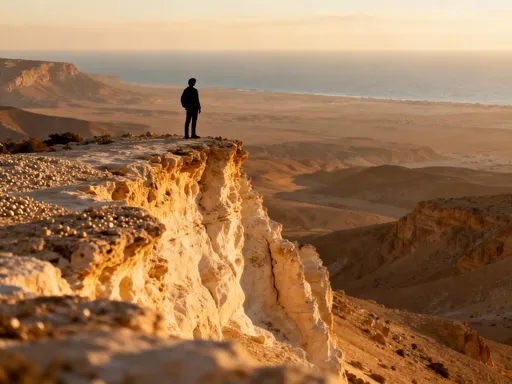
The Skeleton Coast is not a destination for the faint of heart. Its name alone evokes images of desolation—bleached whale bones, rusted metal carcasses, and endless dunes meeting a churning sea. Yet, for those who seek more than postcard views, this remote stretch of Namibia’s Atlantic shoreline holds a magnetic pull. It is one of the most isolated and dramatic landscapes on Earth, shaped by powerful ocean currents, dense fog banks, and an arid desert that has defied life for millennia. The Benguela Current, flowing northward from Antarctica, chills the coastal air, creating a thick marine fog that rolls in daily like a slow breath. This fog is not just atmospheric—it is life-giving, sustaining lichens, beetles, and even desert-adapted elephants that move like shadows through the mist.
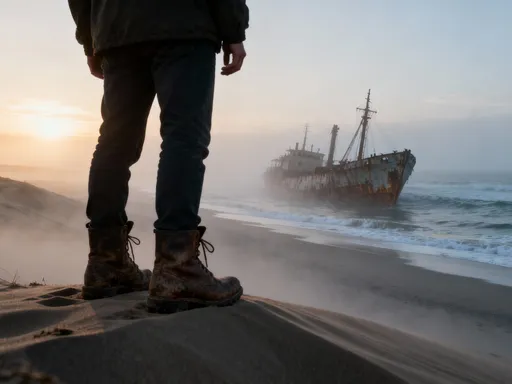
Historically, the coast earned its name from the countless shipwrecks scattered along its shores—victims of hidden reefs, sudden storms, and misleading fog. Over 1,000 vessels lie buried in the sand or half-submerged in the surf, silent witnesses to the dangers of this unforgiving coastline. Yet today, the Skeleton Coast is increasingly sought not for its dangers, but for its authenticity. In a world of curated experiences and crowded attractions, this place remains raw and unfiltered. It does not perform for visitors. It simply is. And in that stillness, there is a rare invitation: to slow down, to wander with intention, and to embrace uncertainty as part of the journey.
What makes the Skeleton Coast truly unique is the depth of culture that exists beneath its barren surface. The land is not empty—it is inhabited by people whose ancestors have lived in harmony with this harsh environment for generations. The Himba, Herero, and Damara communities carry oral histories that breathe life into the silence. Their stories speak of survival, resilience, and spiritual connection to the land. For a woman who has navigated the complexities of family, work, and personal growth, these narratives offer profound resonance. They remind us that strength is not always loud, and wisdom often comes from stillness. The coast does not reward speed. It rewards presence. Those who move slowly, who listen closely, find that the land begins to speak—not in words, but in feelings, in shifts of light, in the way the wind carries a distant echo.
Footsteps Through Fog: Wandering the Northern Coast
Traveling the northern Skeleton Coast is an expedition, not a casual drive. From the Angolan border down to Cape Fria, this region is accessible only by guided 4x4 vehicles or charter flights, ensuring that only those committed to the journey can reach it. The roads, if they can be called that, are little more than tire tracks across salt pans and shifting dunes. Each kilometer traveled feels like a step further from the modern world. The air grows cooler, the light softer, and the silence deeper. It is here, in this sensory shift, that the true nature of the coast begins to reveal itself.
One of the first landmarks many travelers encounter is the Eduard Bohlen, a German cargo ship that ran aground in 1909. Once stranded on what was then the shoreline, the ship now lies half-buried in the desert, nearly ten kilometers inland due to the relentless movement of the dunes. Its rusted hull rises from the sand like a relic from another time, a haunting monument to the power of nature. Nearby, Conception Bay offers a quieter kind of beauty—its wide expanse of tidal flats and rocky outcrops dotted with oystercatchers and flamingos during migration season. The contrast between decay and life is striking, a reminder that even in the most desolate places, nature finds a way.
Further south, the seal colony at Cape Cross is one of the largest in the world, home to over 100,000 Cape fur seals. The noise is overwhelming—barks, grunts, and the constant movement of bodies on the rocks. While impressive, the site is managed with strict visitor guidelines to minimize disturbance. Boardwalks keep tourists at a safe distance, and visits are limited to certain hours to protect breeding females and pups. This balance between access and preservation is a model for responsible tourism. Local guides often share how coastal communities view these animals not as spectacles, but as part of the natural rhythm. Some elders speak of the seals as messengers, their presence tied to the health of the ocean. These interpretations add layers of meaning to what might otherwise be seen as just another wildlife sighting.
Walking through this landscape, the senses are constantly engaged. The crunch of salt crusts underfoot, the metallic tang of the air, the way the fog muffles sound until even your own footsteps feel distant—these details shape the experience. There are no cafes, no souvenir stands, no Wi-Fi signals. Instead, there is space. Space to think, to feel, to simply be. For women who have spent years managing schedules, meals, and emotional labor, this kind of solitude can be transformative. It is not escape, but reconnection—to oneself, to nature, to the quiet strength that comes from stillness.
Voices of the Desert: Encounters with Local Communities
One of the most profound aspects of the Skeleton Coast journey is the opportunity to engage with local communities. While the landscape may appear empty, it is deeply inhabited by people whose knowledge and traditions are integral to its survival. Travelers who take the time to listen often find that the human stories are as compelling as the natural ones. In small settlements near abandoned mission stations, Herero elders share oral histories that stretch back generations. Their voices carry the weight of resilience—stories of displacement, adaptation, and cultural preservation. Dressed in their distinctive Victorian-inspired gowns and elaborate headdresses, the Herero women embody a unique blend of tradition and dignity. Their presence is a living testament to the strength of identity, even in the face of historical upheaval.
Further inland, encounters with Damara guides offer another dimension of understanding. The Damara people, one of Namibia’s oldest ethnic groups, have a deep connection to the land’s geology and ecology. Many serve as trackers and cultural interpreters on guided tours, sharing knowledge passed down through generations. They can read the fog like a map, predict animal movements by subtle changes in the wind, and identify medicinal plants that thrive in the harshest conditions. One guide explained how certain lichens, when crushed and mixed with water, can treat skin infections—a remedy known long before modern medicine arrived. These insights are not presented as curiosities, but as practical wisdom born of necessity.
Respectful engagement is key. Tourism initiatives led by local cooperatives ensure that benefits stay within the community. Homestays, when available, are not performances for tourists, but genuine invitations into daily life. A shared meal of oshifima (a maize-based porridge) and smoked meat, eaten under a star-filled sky, becomes more than sustenance—it becomes connection. Children may shyly offer handmade bracelets, elders may gesture toward the horizon and speak in quiet tones about ancestors who walked the same land. These moments are not staged. They unfold naturally, shaped by mutual respect and curiosity.
For women who value meaningful relationships and authentic experiences, these interactions can be deeply moving. They shift the journey from sightseeing to soul-seeing. There is a difference between observing a culture and being welcomed into its rhythm. When a Herero grandmother smiles and places a hand on your arm, saying simply, “You are here now,” it carries a weight that no photograph can capture. These exchanges remind us that travel is not just about where we go, but how we are changed by the people we meet along the way.
Survival on the Edge: How Nature and Culture Coexist
The Skeleton Coast is a study in survival. In a place where rain is measured in millimeters per year and temperatures swing dramatically between day and night, life persists through ingenuity and adaptation. The fog, so central to the coast’s mystique, is also its lifeline. Each morning, moisture-laden air condenses on the backs of darkling beetles, which then tilt their bodies to channel droplets into their mouths—a process known as fog-basking. Lichens absorb moisture directly from the air, forming fragile crusts on rocks. Even elephants—yes, elephants—have learned to navigate this desert, traveling great distances to find waterholes and using ancient migratory routes known only to their herds.
Human communities have developed parallel strategies. The concept of minimalism is not a trend here—it is a necessity. Water is collected in underground tanks, food is preserved through drying and smoking, and movement is planned around the availability of resources. Patience is not just a virtue; it is a survival tool. A Damara elder once said, “We do not rush the land. We wait for it to speak.” This philosophy extends to decision-making, conflict resolution, and even storytelling—everything unfolds in its own time.
Conservation efforts in the region increasingly recognize the value of integrating traditional knowledge. Rotational grazing practices, used for generations by pastoralist communities, help prevent overuse of fragile vegetation. Water preservation techniques, such as the construction of small catchment systems, are being revived and adapted for modern use. These methods are not seen as outdated, but as time-tested solutions to contemporary challenges. Eco-tourism operators now collaborate with local leaders to design experiences that protect both the environment and cultural integrity. For example, guided walks follow established paths to avoid disturbing animal tracks or sacred sites. Campsites are moved regularly to allow the land to recover.
This synergy between nature and culture offers a powerful lesson for travelers, especially women who often serve as stewards of their households and communities. The idea that sustainability is not a burden, but a way of living, resonates deeply. It challenges the notion that progress must come at the expense of tradition. Instead, it suggests that the wisdom of the past can guide the innovations of the future. In a world facing climate uncertainty and cultural erosion, the Skeleton Coast stands as a quiet example of balance—a place where resilience is not shouted, but lived.
Choosing the Right Path: Responsible Wandering
Visiting the Skeleton Coast is a privilege, not a right. Because of its ecological sensitivity and cultural significance, access is carefully regulated. Travelers must obtain permits for certain zones, and all visits must be conducted through licensed, ethical tour operators. These regulations are not bureaucratic hurdles—they are safeguards. They ensure that the land remains protected, that wildlife is not disturbed, and that local communities benefit from tourism rather than suffer from it.
When selecting a tour operator, it is important to ask questions. Does the company employ local guides? Do they contribute to community projects? Are their vehicles and campsites designed to minimize environmental impact? Reputable operators prioritize low-impact travel: they avoid off-trail driving, prohibit unapproved campfires, and ban the use of drones, which can disturb wildlife and violate cultural protocols. These rules are not meant to restrict enjoyment, but to preserve the very qualities that make the coast special.
Timing is also crucial. The best season to visit is from May to October, when temperatures are cooler and fog is more predictable. Summer months bring extreme heat and increased wind, making travel more challenging. Packing should reflect the environment: layered clothing for temperature shifts, sturdy boots, a wide-brimmed hat, and a reusable water bottle. But perhaps the most important preparation is mental. The coast is not a place of constant stimulation. There will be long stretches of silence, limited connectivity, and few comforts. For women accustomed to multitasking and managing multiple responsibilities, this can be both a challenge and a gift. It invites a different kind of strength—one rooted in presence, not productivity.
It is also important to acknowledge the real risks without romanticizing hardship. The isolation means that medical help is hours away. Communication can be unreliable. Weather can change rapidly. These are not reasons to avoid the journey, but reasons to prepare mindfully. A well-planned expedition, led by experienced professionals, balances adventure with safety. The goal is not to conquer the land, but to move through it with humility and care.
The Hidden Rhythm: Time, Silence, and Cultural Awareness
One of the most profound transformations that occurs on the Skeleton Coast is a shift in the perception of time. In daily life, time is measured in appointments, deadlines, and notifications. Here, time slows. It stretches. It becomes fluid. Sitting atop a dune at dawn, watching the fog roll in like a slow tide, one begins to notice details that would otherwise go unseen—the track of a sidewinding snake, the faint call of a lark, the way light changes the color of the sand from gray to gold. These moments are not filled with activity, but with awareness.
Silence, too, becomes a teacher. At first, it may feel uncomfortable—empty, even. But with time, it reveals itself as a space for reflection. Without the constant input of voices, screens, and tasks, the mind begins to settle. Thoughts that have been buried beneath routine rise to the surface. Emotions long ignored find room to breathe. For women who have spent years putting others first, this kind of introspection can be both healing and empowering. It is not about escaping responsibility, but about reclaiming a sense of self that may have been overshadowed by duty.
Cultural humility is another essential part of this rhythm. Not every story is meant to be shared with outsiders. Not every place should be visited. Some sacred sites are not open to tourists, and that is as it should be. Respecting these boundaries is not about exclusion, but about honoring the integrity of a culture. It means listening more than speaking, observing more than intervening, leaving deeper traces in memory than in sand. When a guide says, “This place is not for pictures,” it is not a refusal, but an invitation—to witness with the heart, not just the eyes.
This awareness extends beyond the journey itself. It shapes how we travel, how we interact with unfamiliar places, and how we carry our experiences home. The Skeleton Coast does not ask for admiration. It asks for attention. It asks us to be present, to move gently, and to recognize that some of the most powerful moments are the quietest ones.
Beyond the Bones: Carrying the Coast With You
The true measure of a journey is not how many places you see, but how deeply you are changed by them. The Skeleton Coast does not leave you unchanged. Long after the flight home, the images linger—the rusted shipwreck, the seal’s cry, the elder’s smile. But more than images, it is a feeling that stays: a sense of spaciousness, of clarity, of connection to something larger than oneself. For women who have navigated the complexities of life with grace and strength, this journey offers a rare gift—the chance to remember who you are beneath the roles you play.
The coast teaches that value is not found in abundance, but in presence. That wisdom is not always loud, and beauty is not always bright. That resilience is built not in grand gestures, but in daily acts of patience, care, and attention. These lessons do not belong to the desert alone—they belong to life. They can be carried into the kitchen, the classroom, the boardroom, the garden. They remind us that simplicity is not lack, but focus. That silence is not emptiness, but fullness waiting to be heard.
As travelers, we have a responsibility—not just to see the world, but to protect it. This means sharing stories with care, supporting community-led initiatives, and choosing experiences that honor both people and place. It means resisting the urge to conquer, and instead choosing to connect. The Skeleton Coast does not need more visitors. It needs stewards—those who will listen, learn, and leave only footprints of respect.
In the end, wandering is not about escape. It is about return. Return to simplicity. Return to truth. Return to the quiet strength that has always been within. The Skeleton Coast does not give answers. It creates space for the questions to matter. And in that space, we find not just the soul of a place, but the soul of ourselves.